
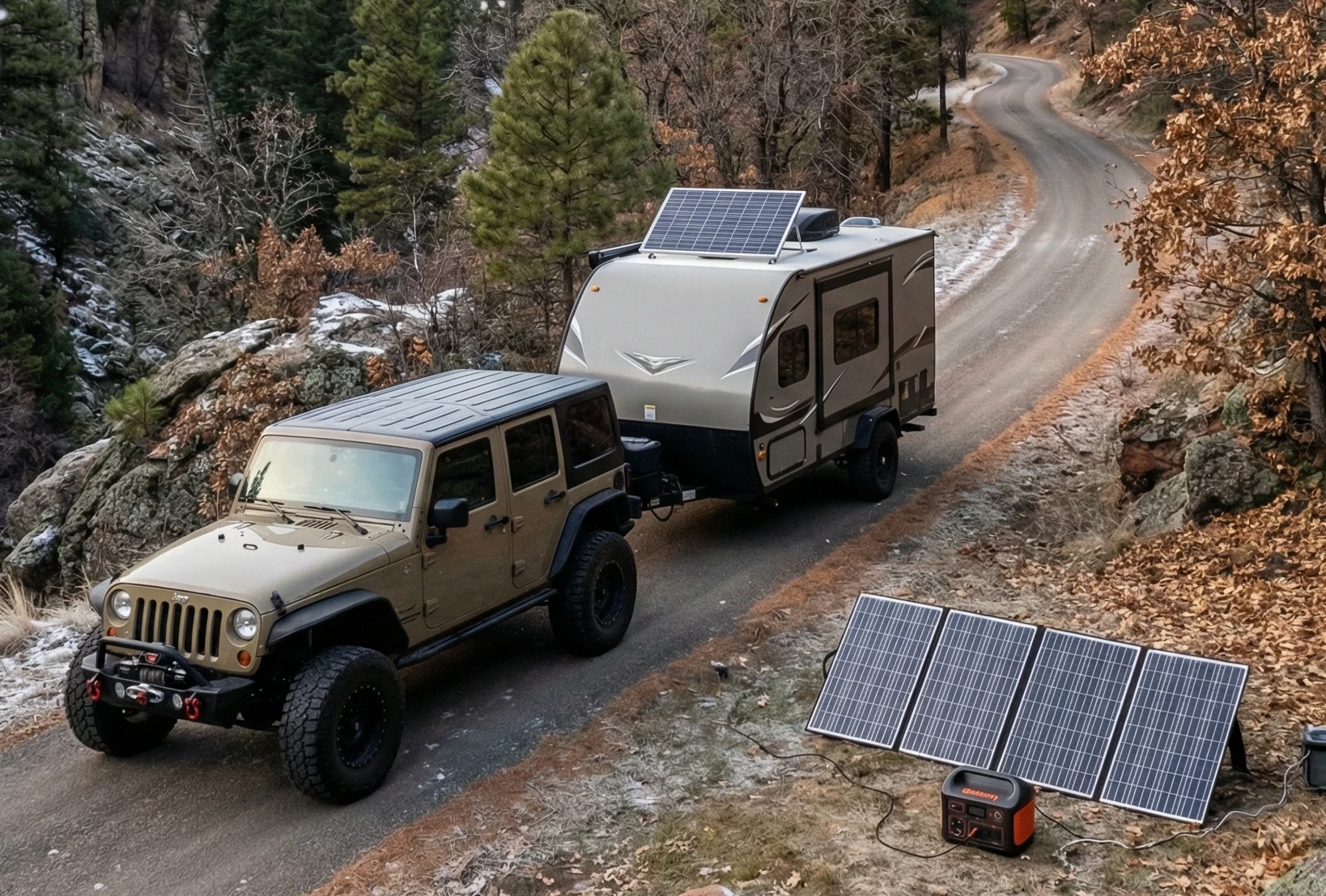
 Solar panels have become a game-changer for adventurers and travelers, making boondocking in an RV a breeze. They offer you the freedom to explore off-grid locations while ensuring you don’t miss out on electricity for essentials. Before diving deeper into the technical stuff, it’s good to get your head around some basics that can affect your solar panel efficiency.
Ever heard of the 33% rule in solar panels? It’s all about not drawing more than a third of your battery’s capacity to maintain its longevity. This is crucial when you’re relying on solar panels off-grid, as it helps keep your system efficient and your battery full, avoiding those dreaded shutdowns when you need power the most! I actually ran into that problem last week, after the Thanksgiving holiday…
It was cloudy, cold and dreary with temperatures hovering in the low 50s with a cold front moving in later that night, dropping temps into the 30s. I have an inflatable pop-up imported from Australia, and I need battery power for the compressor to inflate the air chambers of my glorified tent-on-wheels.
Long story short… we arrived at our camp site with only 38% capacity left in the battery and 12.1v showing in the charge controller. The plug vibrated loose during journey, and did not provide the trickle-charge from the tow vehicle during the 4-hour trip up the dirt road/Jeep trail and my 12 volt fridge was running the whole time. Remember, it was cloudy and late in the day by the time we got there.
Anyway, we lost pressure in the air chambers, and the tent slowly, slowly deflated. We had no way to reinflate until the sun came up the next morning recharging the battery. No, I did not have the spare back up manual air pump because the author made the unwise decision to leave it at home because it is large and cumbersome with no place to store it. It is just too big! I’ll tell you about that another time, though.
Now, throwing a twist into the mix, the 20% rule is another guideline often highlighted by solar users. This rule typically deals with not discharging the battery beyond 20% of its capacity. Sticking to this helps in extending battery life and ensuring you still have juice for those overnight or cloudy-day power essentials when that sunshine just ain’t around. See the above paragraphs for an example of NOT following this rule.
Let’s talk about capacity. You might be wondering if your 200-watt solar panel can run a 12-volt refrigerator. Generally, if your solar setup is comprehensive and adequately installed, it should handle basic appliances and then some. But knowing your energy consumption and how it matches up with your panels is key. So, getting your head around these rules and capacities is pretty much the first step in mastering solar panel usage with RVs.
Comprehensive Maintenance Guide for RV Solar Panels
Keeping those solar panels in tip-top shape is essential to get the most out of them on your boondocking trips. Regular maintenance ensures that you’re not losing out on precious energy due to issues that often go unnoticed.
One of the key things to start with is regular inspections. Look out for any dirt, debris, or bird droppings that might be shading part of the panel. Even a small leaf can impact efficiency, so a quick visual check every now and then can save a whole lot of energy.
Let’s talk about cleaning because dirty panels aren’t efficient panels. A soft brush or a non-abrasive cloth usually does the trick for loose debris. And watch out for those hard water stains; they can be tough! Use distilled water for rinsing, if possible, to avoid mineral build-up. This approach keeps the panels sparkling and functional.
Anchor to a cleaning routine that suits your travel style and the environments you’re visiting. Dirty highways, dusty roads, and unmaintained trails puts a lot more dirt on the panels than you realize. A good washing before each of your travels will make sure your panels are always working at their best.
When maintaining solar panels, never forget the hardware. Secure the mounts and frame, and inspect the wiring and connections for any signs of corrosion or damage. This attention to that level of detail, ensures the panels remain effective and safe through all your adventures.
Effective Cleaning Strategies for Solar Panels
Getting those solar panels clean not only keeps them looking sharp but also maximizes their energy output. Bringing out their best is all about using the right materials.
Dawn dish soap is often a hot topic when it comes to cleaning solar panels. It’s generally safe because it’s gentle and doesn’t leave behind any sudsy residues that could interfere with light absorption. Mix a small amount with clean water for an effective solution that breaks down dirt and grime without harming the panel surface.
Spraying water directly on panels is a method some folks swear by, especially when a quick rinse is needed to clear off loose dirt and dust. But here’s the kicker: make sure the water pressure is not too high, as it could damage the panels or dislodge hardware. Whenever possible, aim to clean during the cooler parts of the day to avoid water spots and streaks from rapid drying.
For those eco-friendly enthusiasts out there, using collected rainwater or biodegradable cleaning products gets a thumbs up. These methods minimize the environmental impact of keeping solar panels tidy.
Maximizing Efficiency and Output for RV Solar Panels
Hanging out in nature means getting the most juice from your solar panels. It’s all about strategizing how you use that energy. When you’re boondocking, your panels generate maximum power when the sun is highest and unobstructed. 12:00 noon, is the best, so charging batteries or running appliances during this time is most efficient. But really, any time the sun is up, is a good time to charge.
Managing your energy load is vital. Keep track of what devices you’re using and how much power they draw. A little tip: unplug gadgets when they’re not in use. Those standby modes still sip milli-amps of energy that could be better spent elsewhere.
Another hack is to angle those panels just right. If your setup allows for tilting or adjusting, aim to maximize that sun exposure throughout the day. Yep! Follow the sun! Portable solar panels can be repositioned as needed, especially handy if you park in varied terrains or under some shade at different times of the day.
Keep tabs on your battery health by not consistently charging it to full capacity and discharging it fully. Balancing this not only stretches the life of your battery but also ensures you have a consistent energy supply.
Tell us in the “Comments” about your solar mishaps or your solar successes, or just funny things that have happened to you on the trail! See ya soon!